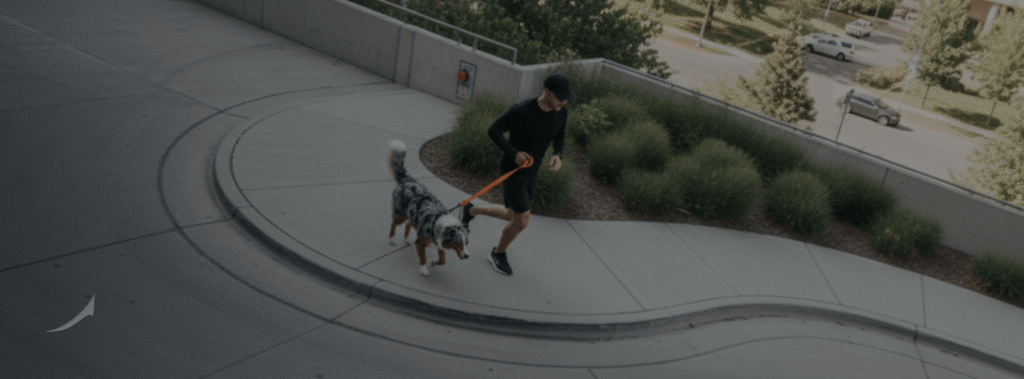

For many dogs, activity doesn’t end cleanly.
The walk stops.
The door closes.
Movement pauses.
But the shift into rest feels awkward or incomplete.
This isn’t about how much activity happened.
It’s about what happens between activity and rest.
What “Transition” Means for Dogs
A transition is the shift from one state to another.
For dogs, that often means moving from:
-
engagement
-
output
-
alertness
into:
-
recovery
-
rest
-
disengagement
Some dogs make this shift naturally.
Others don’t.
When the transition isn’t clear, the system lingers between states.
How Transition Struggles Show Up at Home
Dogs who struggle with transitions often appear undecided.
Owners notice:
-
brief resting followed by re-engagement
-
hovering after activity ends
-
pacing without urgency
-
difficulty staying settled in one place
The dog isn’t distressed.
They’re unresolved.
Why Capable Dogs Struggle Most With Transitions
Dogs that recover quickly and stay ready for more often struggle here.
Their systems don’t automatically interpret the end of activity as a signal to disengage.
Instead of downshifting, they return to a neutral-ready state.
This is why some dogs don’t recover fully after activity, even when the activity itself was appropriate.
Why Transition Issues Are Often Misread
Because transitions are quiet, they’re easy to miss.
Owners often assume:
-
the dog needs more
-
the day wasn’t enough
-
something was skipped
In reality, the problem isn’t what happened.
It’s how the shift happened.
When transitions aren’t clear, settling later becomes fragile.
Why Transitions Affect the Whole Day
Transition struggles don’t stay isolated.
When transitions remain unresolved:
-
recovery stays shallow
-
alertness carries forward
-
evenings feel inconsistent
Across days, this creates patterns that feel unpredictable.
Those patterns are explained more fully here:
Why Some Dogs Need a Predictable Weekly Rhythm to Settle
When This Explanation Does Not Apply
Not all transition issues fit this pattern.
Some dogs struggle due to:
-
discomfort
-
age-related changes
-
sudden stressors
This page applies to dogs who remain calmly alert after activity despite normal routines.
Closing Orientation
Transitions are easy to overlook because they’re brief.
But for some dogs, the space between activity and rest is where settling either succeeds or quietly falls apart.
Recognizing that moment helps explain why effort alone doesn’t always lead to predictable rest.